

Neurodiversity – is a word used to explain the unique ways people’s brains work. While everyone’s brain develops similarly, no two brains function just alike. Being neurodivergent means having a brain that works differently from the average or “neurotypical” person.
Neurodiversity is an Umbrella term – that describes the idea that people experience and interact with the world around them in many differing ways; there is no one “right” way of thinking, learning, and behaving, and differences are not viewed as deficits.
Neurodiversity – refers to a proposed framework that argues there is intrinsic diversity in human brain function and cognition, and that certain things currently classified as neurodevelopmental disorders are differences and disabilities but are not necessarily pathological.
Neurodiversity in the Workplace
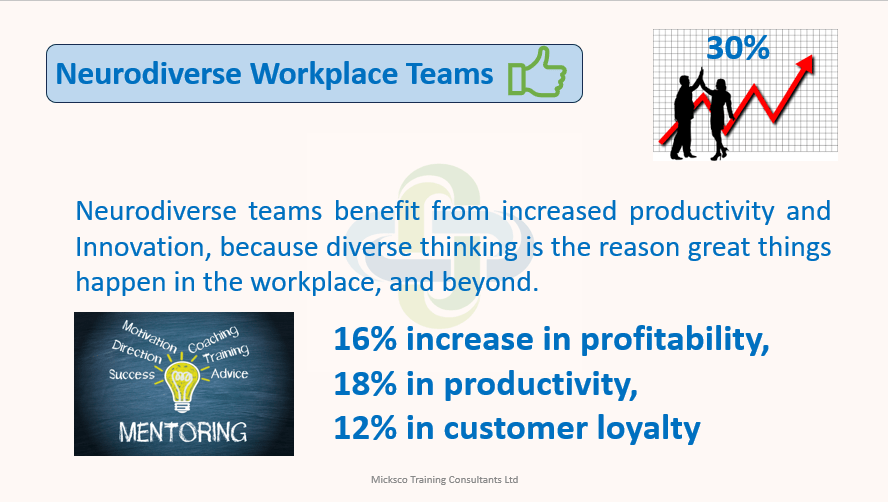
Research suggests that teams with neurodivergent professionals in some roles can be 30% more productive than those without them. Inclusion and integration of neurodivergent professionals can also boost team morale.
Each neurodivergent person is unique, and it wouldn’t be accurate to generalize their cognitive process. Abilities such as visual thinking, attention to detail, pattern recognition, visual memory, and creative thinking can help illuminate ideas or opportunities teams might otherwise have missed
Mentors provide much-needed support to all workers’ careers, but they are perhaps even more important for the development of the neurodivergent workforce. Organizations that provide mentors to professionals with a disability reported a 16% increase in profitability, 18% in productivity, and 12% in customer loyalty.
Is Neurodiversity a Mental Illness?
The answer is NO it is not a Mental illness. Neurodivergence is not the same as a disability or mental illness. Neurodivergence is not a diagnosable mental illness. Other types of neurodivergence are associated with chronic mental health illnesses. Having neurodivergent traits may create challenges, especially where there are social expectations.
Neurodivergence is not the same as disability or mental illness, but it can be associated with them. Accepting human neurodiversity is important so all people can live their best lives. Other types of neurodivergence is associated with chronic mental health illnesses such as Bipolar disorder, Obsessive-compulsive disorder, Borderline personality disorder, Anxiety disorders, Depression
Having neurodivergent traits may create challenges, especially when navigating settings where there are social expectations. The differences can lead to, or be associated with, difficulties, including mental illnesses.
Neurodiversity types
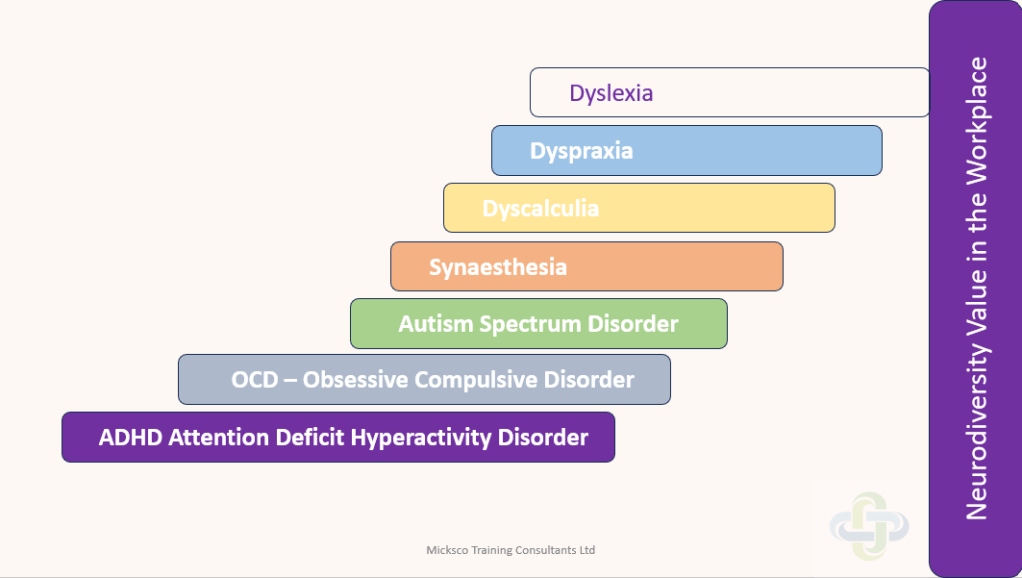
In the workplace we may recognize some of the more common type of Neurodiversity, however we should be cautious to assign any label to any person just because they may have different outlooks, gifts talents and perspectives. Not all our brains are wired precisely the same and that is what makes and adds to our uniqueness as a human being.
Let us have a look at some of the types of the Neurodivergent workforce and how they bring values and talents to enable business to flourish and grow.
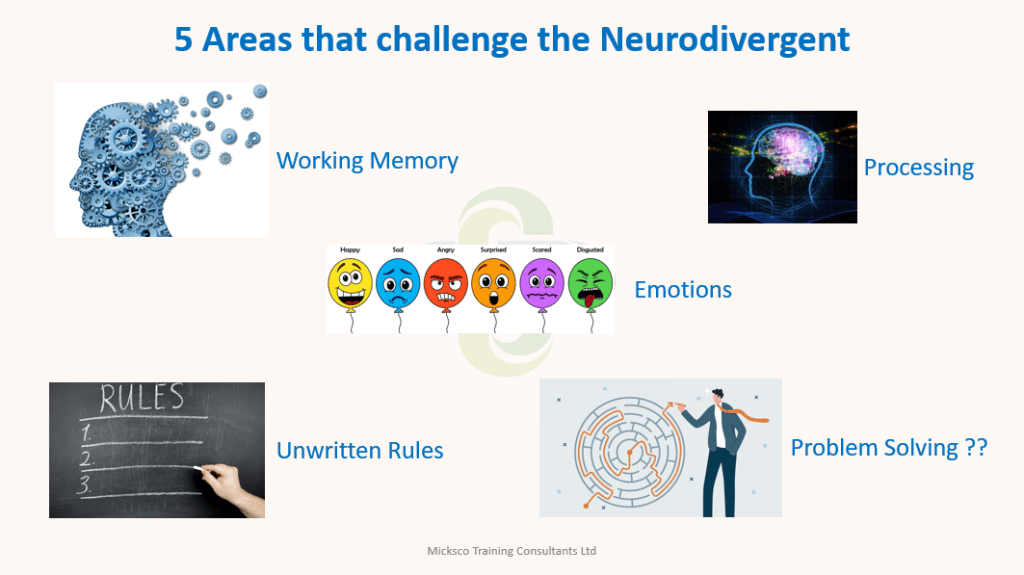
Working Memory – When you need to remember a phone number, a shopping list or a set of instructions, you rely on what psychologists and neurosciences refer to as working memory. It is the ability to hold and manipulate information in mind, over brief intervals. It is for things that are important to you in the present moment, – but for the Neurodivergent it is ….. A place of struggle they can quickly and easily forget things – like going to the kitchen to make a cuppa tea and arriving there not sure why or what you came there for. They may struggle to read and interpret directions and instructions.
Processing – the processing of cognitive and sensory processing is a common process but for the Neurodivergent it is ….. Challenging, sometimes a barrier, and the speed of processing can vary from supper fast – ADHD to Slow – Dyspraxia, Dyslexia – example is asking 2 questions and having nor response – that is because they are trying to process the first question. How are you today, what are you plans for the schedule today …. Sensory processing could manifest in how to filter out, sounds, smells, light, heat, textures that may make them appear clumsy or in pain. Think of it like this if your computer page you requested takes time to process is the information any less accurate or informative?
Emotions – We all have emotions in one form or another at various moments – but for the Neurodivergent it is …..they process emotions differently. They think of emotions in extremes because they feel and sense in extremes. Happy is elated. Sad is distraught. Grief is the end of the world. Light, sound, touch, taste, and smell have an emotional effect on them. They sometimes have to turn off their emotions in order to protect themselves from overload. This is not because they cannot feel; it is because they feel SO much all of the time.
Unwritten rules – They may have never been written down, voted on or “put in the minutes”, but they are assumed true by the majority of people. They are considered law. These are the rules people will defend and protect the most. They’ll fight to keep them from being changed or bent. They are based on the pretext that we are all the same and on the same page – But for the Neurodivergent they are … challenging as it creates misunderstanding as the rules can change without formal notification. It leads to masking to manage the rationale of the rule and why it is not evident and is not only in the workplace but in social environments as well.
Problem Solving – We all have some level of problem-solving skills based on our Frame of Reference , education and experiences But for the Neurodivergent they are …sometime great out of the box specialist thinkers and problem solvers because they do not see things the same way as Neurotypical people do. They have a good eye for detail and logic, they excel in pattern recognition etc
Pictorial view of Neurotypical and Neurodivergent

In this pictorial view we have attempted to show that the upper left hand picture – Neurotypical brain and the lower right hand picture – Neurodivergent brain , that even though the structures within the brain of all humans are similar it is the interface, interaction and processing of information that varies between the Neurotypical and Neurodivergent brains, which provides those amazing gifts and talents that perhaps we have been missed in previous decades.
The upper right pictorial view could be related to a Neurotypical individual and the lower right pictorial view could represent a Neurodivergent individual.
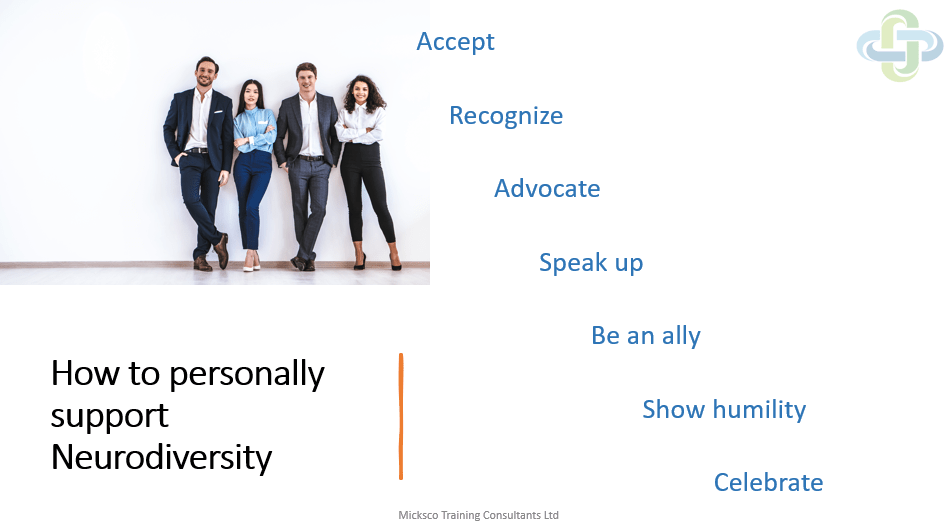
Supporting the Neurodivergent individual colleague in the workplace
Accept – that neurodivervisty is part of human diversity. An individual is not neurodiverse this only applies to a group.
Recognize – that neurodiversity is not a label or a diagnosis and it does not define someone, that no two neurodivergent people are the same; they will have different goals and needs.
Advocate – for practices that accept and accommodate neurodivergence. You can do this in any space you frequent, such as an office, school or another group.
Speak up – if you hear or see someone being prejudiced against someone who is neurodivergent.
Be an ally – for neurodivergent people by telling them they can come to you if they need to talk or need help.
Show humility – by listening to their needs rather than imposing your ideas of what you think they need.
Celebrate – the people you care about who are neurodivergent.
Embracing Neurodiversity in the Workplace

Providing workplace adjustments – As an employer, it is your legal duty to provide neurodivergent employees with workplace adjustments. Whilst it is the law, it can also build a better relationship with your neurodivergent workforce. And helps them to thrive at work when they have the tools they need.
Maintaining open communication – You should maintain an open channel of communication with your neurodivergent employees. This will help them feel comfortable enough to share any issues with you. It also makes it easy for them to ask for help when they need it. Offering training to managers and employees
Training of Managers and Employees – To create an inclusive environment at work, you should ensure everyone is given diversity training. This will help neurotypical employees know what behaviour and language is appropriate around neurodivergent workers. And will create a more inclusive workplace. Promoting a neurodiverse workforce
Raise awareness with internal communications – You should spread neurodiversity awareness internally. This may include creating internal communications or infographics explaining neurodiversity and what it looks like. This will help neurotypical employees work more effectively with neurodivergent workers as they have a better understanding of their behaviours and how to interact with them.
Employers should support neurodivergent workers – in any way they can. Whilst it is your legal duty to consider reasonable adjustments for your neurodivergent employees, supporting neurodiversity benefits your employees and your business. As well as creating a more inclusive workplace. With the right sort of help, neurodiverse employees can gain confidence in their abilities and improve their wellbeing. As well as thrive in an environment that supports them. If you fail to provide support, you may lose employees, face financial losses and even risk damaging your business’s reputation.
Change your hiring process – To promote neurodiversity at work, you should hire neurodivergent workers. You can create hiring programs specifically aimed at neurodiverse talent. For example, hiring managers could encourage neurodivergent workers to apply in their job descriptions.
Respect the value that they bring – – Needs to be completed add content
What type of Discrimination might a Neurodivergent experience at work?

Direct discrimination – is when an employer treats a disabled worker less favourably than other employees.
Indirect discrimination – is when an employer has a policy or practice that puts a disabled worker at a disadvantage.
Perceived discrimination – is when an employee is treated unfairly, because their employer believes they have a protected characteristic.
Discrimination arising from disability – happens when an employer treats a disabled person unfavourably, and the reason for this treatment connects with the individual’s disability.
Failure to make reasonable workplace adjustments – Disabled workers are often at a disadvantage compared to able-bodied employees. So, implementing workplace adjustments actually levels the playing field somewhat
A Focus on the Gifting of Neurodiversity

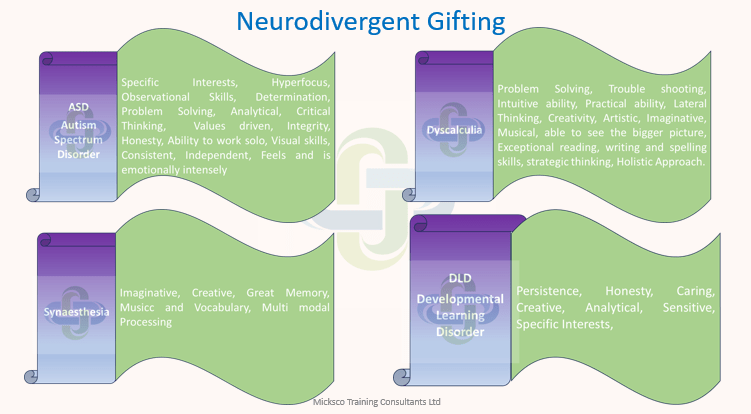
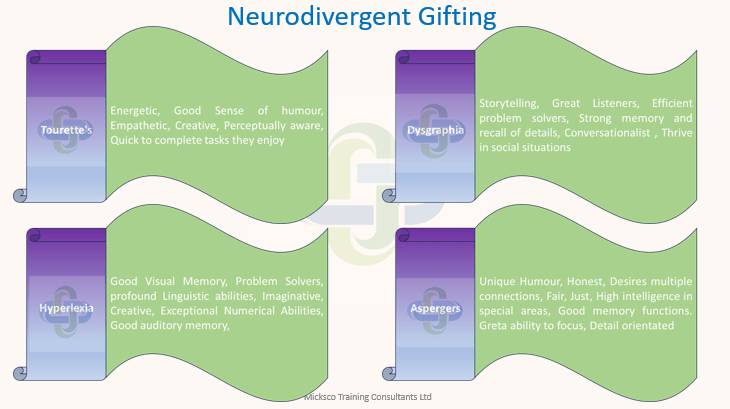
What Mental Health Co-Morbidity are associated with Neurodiversity?
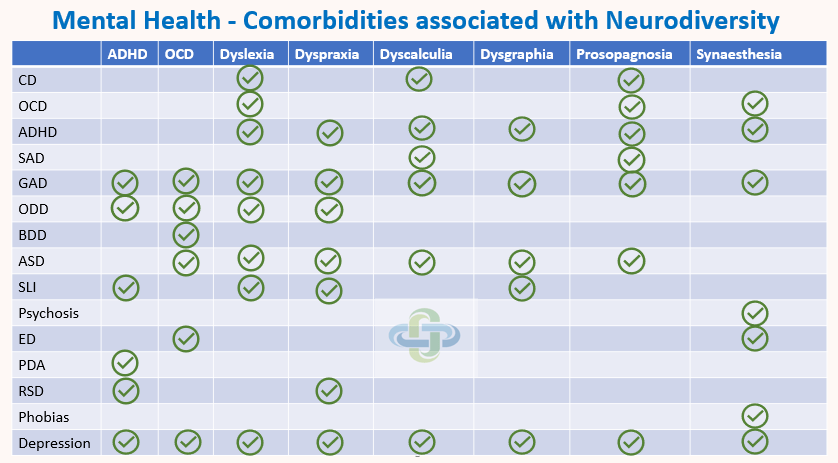
Why Comorbidity of Mental Health if Neurodiversity is not a Mental Illness?
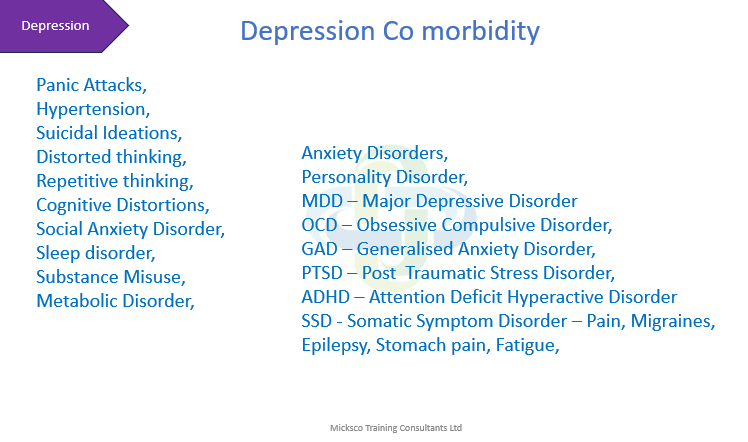
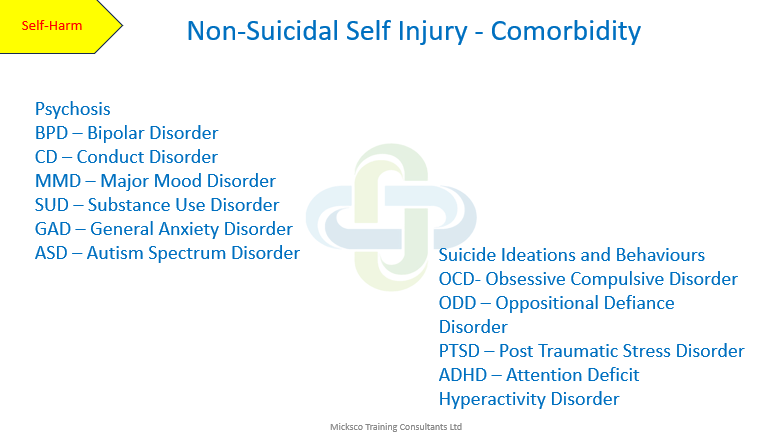
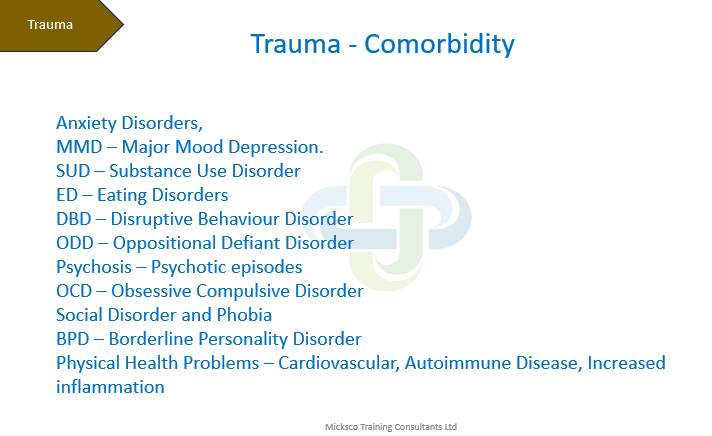
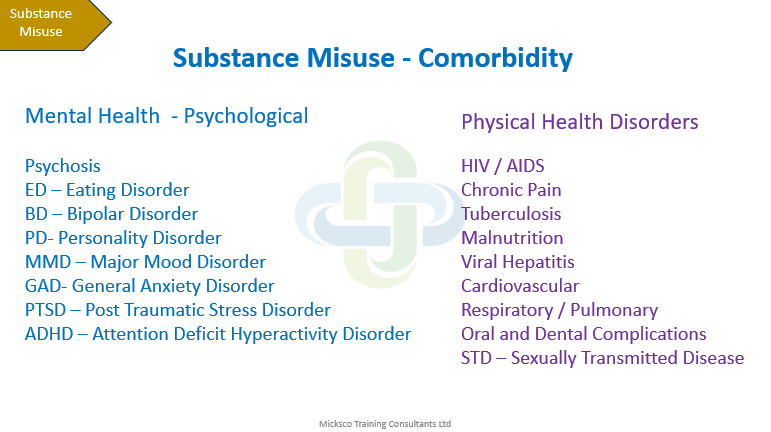
The above table is an indication of typical Mental Health issues that are either latent or evident in a person who is Neurodivergent. It should be noted that these commodities are not only pertinent or evident or specific or applicable within the realm of the the Neurodivergent, but in all cases of Mental Health Illness there are commodities evident. There is no single Mental Health Illness that exists on its own. Let us take a look at a few of the more common Mental Health issues and illnesses that affect both the Neurotypical and the Neurodivergent.
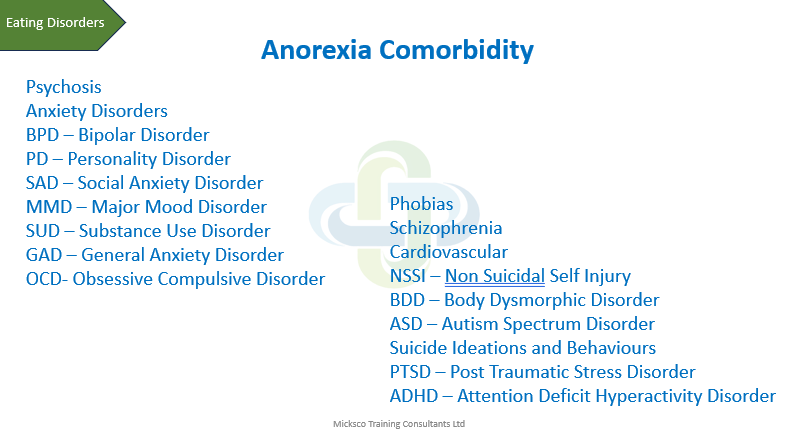
This will hopefully give you some idea of what those with a diagnosed Mental Illness – as per the DSM 5 – may experience various commodities, and therefore demonstrating that that whether Neurotypical, Neurodivergent or having a diagnosed Mental Illness Commodities exist regardless of Gender, Culture, or social standing.
In Conclusion
Assigning a label to someone is easy however the impact of that assigned label has a significant impact on that persons life and well-being and could make things more complex, challenging, life changing or even foster a sense of ” I am not normal” leading to a plethora of other issues. So be careful to assign a label or judge someone – there are always unintended consequences associated with it.
Just because I think and express myself different to the societal norm – (whatever that may look like or be) does not make me any less that a wonderfully and uniquely created human being who has Gifts, Talents and Abilities. So be curious, be accepting ( you do not necessarily have to agree with how I think, or feel or express myself), be respectful we all have a part to play in this journey of life.
Get In Touch
Should this be an area where you may require further information regarding Neurodiversity at work then contact us.
 Mickscotraining