
The Unstoppable and Inevitable Constant of Change
“I cannot say whether things will get better if we change; what I can say is they must change if they are to get better. Georg C. Lichtenberg.
“There is nothing permanent except change.” — Heraclitus.
“I alone cannot change the world, but I can cast a stone across the waters to create many ripples.” — Mother Teresa.
“To exist is to change, to change is to mature, to mature is to go on creating oneself endlessly.” — Henri Bergson
“Change is the law of life. And those who look only to the past or present are certain to miss the future.” — John F. Kennedy
Change Really?
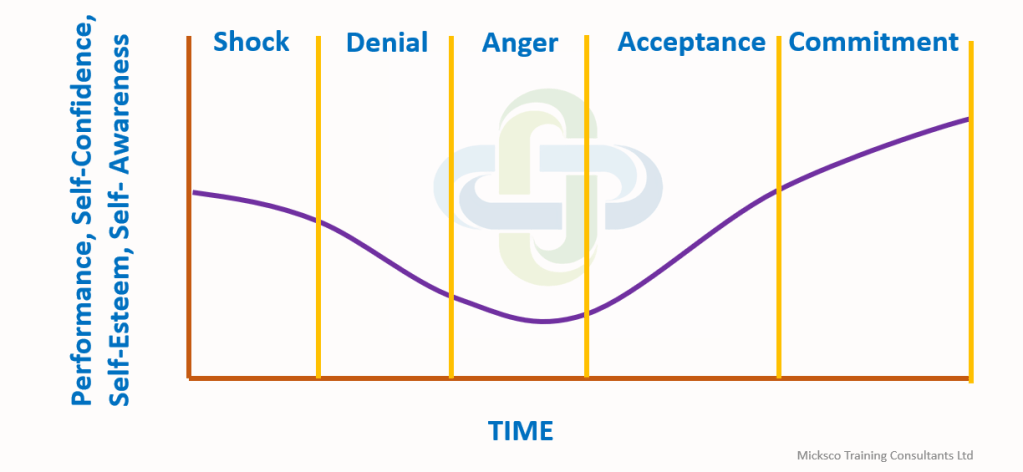
Let us unpack some of the various considerations, aspects and outcomes of change –
Shock – When change is first announced, people start off in shock. They might feel numb and unable to react in the first instance.
Denial – It may take time for people to process the new information and consider its ramifications. They may refuse to engage with the reality of the situation. It is often a stressful and difficult stage for all concerned.
Anger – When the reality of the situation can no longer be denied, people may become angry. This anger might be directed at themselves, or others.
Acceptance – people stop focusing on what has been lost. They begin to rationalize and take steps towards adapting to the change. This stage often sees a rise in morale, engagement and performance
Commitment – people are not only resigned to the change, but are actively committed to it. They might test and explore different elements of the new ways of working. They become engaged in solving problems that the change may have created and are looking for solutions to move things forward.
Change and Our Thoughts
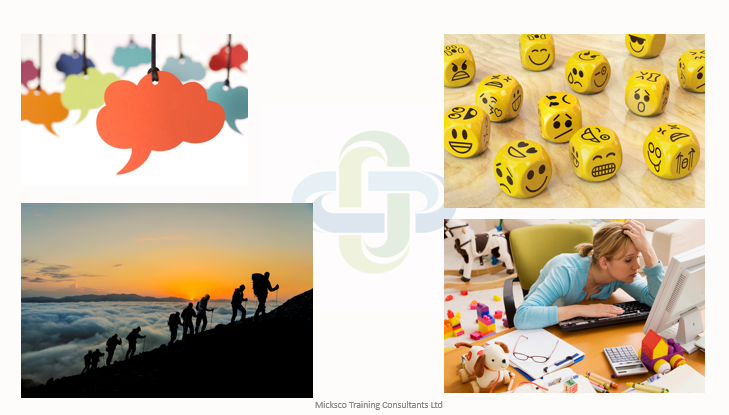
Thoughts – It all starts with a thought – Positive or Negative – and how we then go on to manage these and the associated emotions in a helpful or Non helpful manner.
Helpful may look like – You are braver than you believe, You are stronger than you seem, You are smarter than you think. How can I let this change make me grow, what are the opportunities about this change, what is there that I can embrace in this version of change? How can I make this change work for me and not against me?
Unhelpful may look like – always expecting the worst outcome from any situation. ignoring the good sides of a situation and only focusing on the bad, seeing things as either only good or only bad, with nothing in between (black and white thinking) considering yourself the sole cause of negative situations. This is known as a Cognitive Distortion.
People and Change

There are basically 4 typical types of categories of change and how people view change
Acceptance – I am ready for change and to commit to the new and Exciting aspect of change , Opportunity, Adventure, Self-Development, show me where to sign up.
Convince me – I am not sure about the coming change, Is it good for me, My role, My team , My growth, My future – I am not against change besides it is inevitable so tell me more , enlighten me, Tell me what it could look like , when it will happen, what is the timeline and what are the impacts to me and my future.
Not interested time to leave – I have seen it all too many times, I do not want to go through another process, procedure , policy company change and the possible “New Look” is not for me. Perhaps its time for me to leave and determine what I want to change – My life, My Job, My role, My Location, My working Hours, My interests, My commute.
Resistance to change – I do not want or like change so I will resist and impeded change and make it difficult by disrupting the process until they either stop the change, give me gardening leave or fire me. I do not care about change I want to stay the same.
Questions about the Change
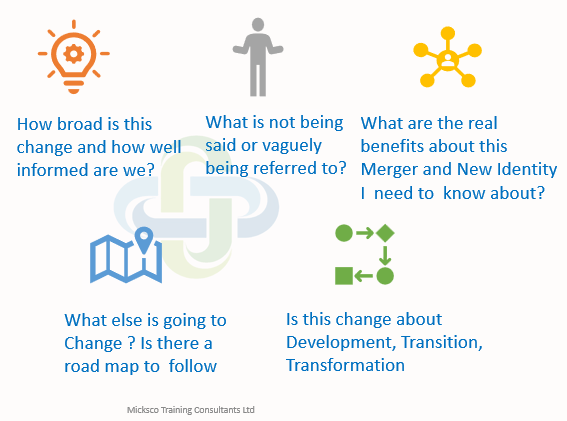
Communication – What is being communicated and how, How informed am I about the coming change.
Transparency – What levels of transparency are been displayed, by me, my team, management are we speaking the same language?
Benefits – How can I get to grips with the possible benefits and what are the possible risks I might encounter along the path of change?
What will change – Is there a road map , with goals milestones, accountability and responsibility for the various stages, What do those stages look like, feel like and cover? Has Risk Assessment been done? Are we good to GO?
Firstly, there is Developmental Change; this occurs when you recognize a need to make improvements to an existing situation. You aren’t recreating the entire workflow but are instead refining it to make it better.
Secondly there is Transitional Change; this happens when you recognize the need to implement a completely new course of action. You have a set plan for making this change happen and are able to control the implementation process over a designated period of time.
Thirdly you can experience Transformational Change. This is not necessarily something that you control as much as you recognize and survive. A new process or “norm” creates itself as a result of the failure of another and usually takes its own shape. You can, of course, refine it as it develops but it is not usually planned.
A Typical Change process looks Like?
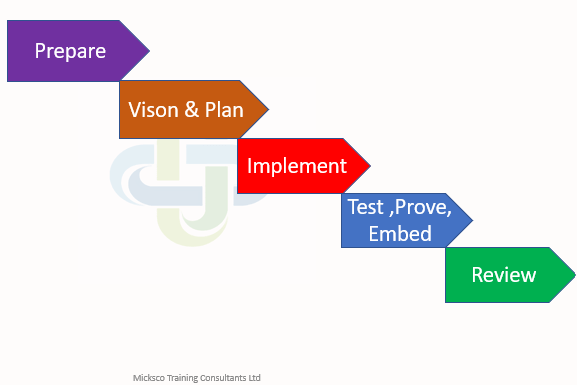
The following processes are normal and essential for managing change in any circumstance or business or project.
Prepare – In the preparation phase, the manager is focused on helping employees recognize and understand the need for change. They raise awareness of the various challenges or problems facing the organization that are acting as forces of change and generating dissatisfaction with the status quo. Gaining this initial buy-in from employees who will help implement the change can remove friction and resistance later on.
Vision and Plan – What goals does this change help the organization work toward? How will success be measured? What metrics need to be moved? What’s the baseline for how things currently stand? Who needs to sign off at each critical stage? What falls outside of the project scope? What The possible Roadblocks, Hindrances or obstacles that we could face?
Implement – After the plan has been created, all that remains is to follow the steps outlined within it to implement the required change. Whether that involves changes to the company’s structure, strategy, systems, processes, employee behaviors, or other aspects will depend on the specifics of the initiative. It must be focused on empowering their employees to take the necessary steps to achieve the goals of the initiative and celebrate any short-term wins.
Test Prove Embed – prevent a reversion to the prior state or status quo. This is particularly important for organizational change related to business processes such as workflows, culture, and strategy formulation. Without an adequate plan, employees may backslide into the “old way” of doing things, particularly during the transitory period.
Review – Conducting analysis and review, or a “project post-mortem,” can help business leaders understand whether a change initiative was a success, failure, or mixed result. It can also offer valuable insights and lessons that can be leveraged in future change efforts.
So what does change bring to our Mental Health and Well-being?
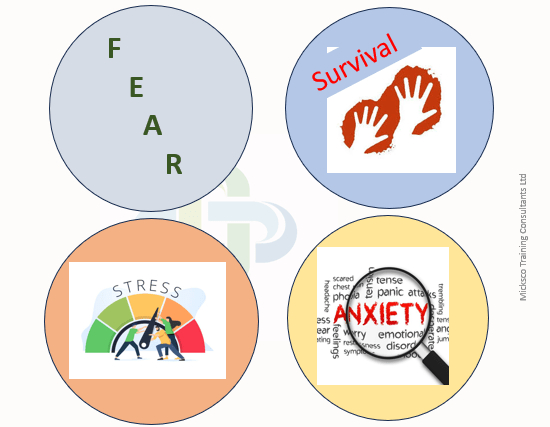
Managing Fear – The fear of change, or Metathesiophobia , is a phobia that causes people to avoid changing their circumstances due to being extremely afraid of the unknown. Understand why change is necessary, embrace the change, Do not overthink it, Determine where you stand, ASK YOURSELF WHAT DO I have direct influence on this coming change and what is out of my hands.
Survival – our instinct may be one of bury my head in the sand type of approach – I will ignore these thoughts and emotions and bury them, It does not matter, I am only a number, I will do what I need to do to survive this to make sure I can survive, Physically, Psychologically, Financially, Socially. An approach may be to be honest about your concerns, be open to and for communication with others and management, ask questions, consider what skills are required to adapt to or embrace the pending changes.
Stress – Is something that happens to us and we then have a stress response. Unchecked this will impact your performance, your immune system, focus, memory physical, Cognitive, emotional impact. It can arise when we feel like we do not have control of or over a situation. Our brains are wired for danger and negative reactions and does not like change. But we are able to manage these by the using stress relieving tactics. Can you afford to fill your container with outside or uncontrolled stress. Solution is self-care to manage your stress levels.
Anxiety – It is a normal human reaction – Will it impact me financially, Am I equipped to take on this role or functional change, it focuses on the risks, the unknown, the future, the unanswerable and on the worst-case scenarios. People fear change because they see it as more work – it takes time, and inevitably people have to design and test new approaches while also continuing business as usual. The resulting struggle with workloads and lack of time, can make the change feel overwhelming. The Anxiety of change can linger for quite some time.
Other Aspects of Change to our Mental Health and Well-being

Loss of Self – Change brings reflection on ones self-esteem, self-confidence, self-awareness. The way you think about change plays a major role in determining how well you deal with it. Automatic negative thinking patterns can undermine your ability to focus on the positive. We are all unique wonderfully created human beings who have value, worth , gifts , Talents and abilities – how we bring these or do not bring these to change will impact on each of us differently.
Business Focus – In business, as in life, few things remain the same. As a result, companies need to be willing to move with the times. They need to modify their operations in response to technological advances, stakeholder expectations, increased competition, and other pressures. These aspects may include Political, Economic, Technological, Legal, Environmental.
Person Focus – Change brings about development or regression in the following areas – physical, financial, relational, emotional, spiritual, and intellectual. Each one builds the others. You can grow yourself in all aspects of personal development but to do so it takes a concerted effort to implement and accept or adapt to change.
Adaptation – It is the process of successfully adapting from an old way to a new one and refers to changes in processes, practices and structures to moderate potential damages or to benefit from opportunities associated with change on personal and business levels. Failure to adapt may lock a person into the past process, procedures or strategies and impact the changes in regressive ways.
How are you doing?
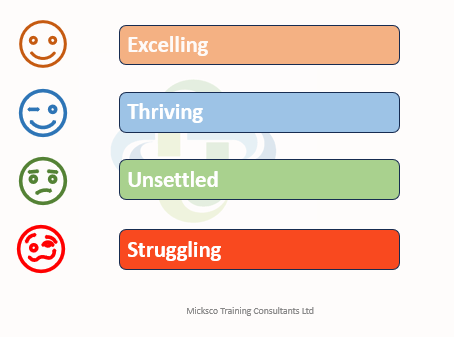
Using this Change Barometer you can easily determine where you are at and what you can do about changing that situation. It may look like this:
Excelling – I am cheerful, happy as Larry, I am performing as usual, I have capacity, I am excited about the future of the business and my role as well as my future, I am realizing the possibilities opportunities and potential of each day.
Thriving – I have normal mood variations, but I am positive, I am able to focus on the task at hand, I am looking after myself in terms of nutrition and exercise, I am curious about the coming change and engaging in conversations about how I feel or think
Unsettled – I am bit more worried than usual, a bit edgy, Feel somewhat stressed, Self-doubt about my abilities, or future, I am not sleeping well because of the worry.
Struggling – Very Anxious, Low Mood, Overwhelmed, Lost some of my Self-Confidence, Self-Awareness, Will I make the cut, I am not able to see past thew week let alone the next few months ahead.
7 Aspects to consider during a process of Change
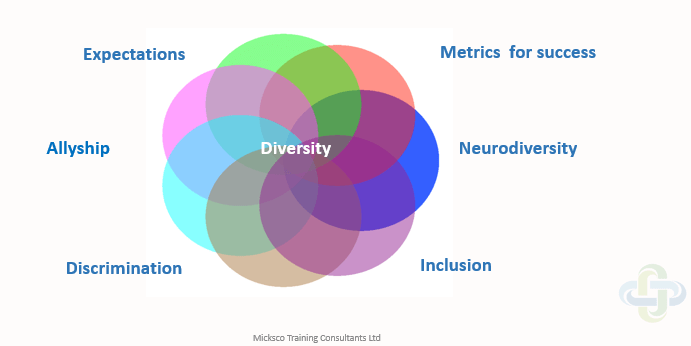
Diversity – is about mutual human understanding, appreciation of our differences, and an extension of empathy and of being non-judgmental. The whole world does not exist through our eyes only, we see things mostly from our own Frame of Reference – ask yourself – What does this change look like from the other persons worldview? Having diversity in a company or team can lead to better problem solving and decision making that is inclusive.
Discrimination – during a time of change perhaps some may people experience discrimination through denial of training opportunities, transfers and promotions, not being paid the same as someone doing the same job with the same experience and qualifications. Even to the extent of exclusion or isolation by co-workers as result of our view of the changes or what we perceive as the extent of changes
Allyship – essentially means supporting change alongside individuals who have historically experienced exclusion and/or under-representation, As well as being a moral imperative, the business implications are rather vast, how might the coming change impact or enhance allyship within the ethos of the company and teams. speaking up, extending opportunities, and challenging the status quo. Allies can speak up for someone who during this time of change may be treated unfairly or dismissively by advocating for them or by amplifying underappreciated perspectives and contributions.
Neurodiversity – is a word used to explain the unique ways people’s brains work. While everyone’s brain develops similarly, no two brains function just alike. Being neurodivergent means having a brain that works differently from the average or “neurotypical” person. So how will this change impact me as Neurodivergent person?
Inclusion – Organizations that express a commitment to inclusion are found to have other positive outcomes, in addition to financial performance, including being six times more likely to be innovative and to anticipate and respond effectively to change, how inclusive has the plan of change been in identifying what changes will take place, by who, when and what style of new management might one anticipate, are my concerns and ideas being considered as part of the change to the business I have been part of for some time.
Metrics for Success – what are the metrics that will be used to determine the success of change by me or my team or division in the overall change process and in what way am I able to contribute and align with these metrics – are they available to to discuss or understand.
Expectations – Break your change initiative down into manageable goals, clarify expectations around who owns those goals and what success looks like for each, and communicate and align all the stakeholders around the plan. Track progress toward your goals. Align your expectations with those of the change plan in terms of skills, abilities and accountability of the implementer of the change.
Some Tips when Change comes your way
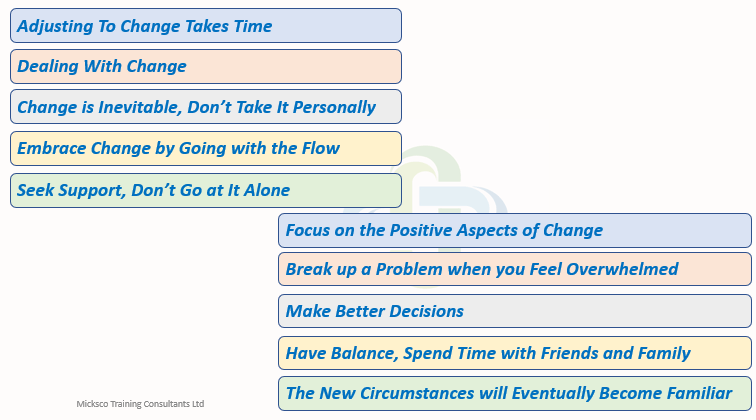
Adjusting To Change Takes Time – Change involves a transition from one set of circumstances to another. Give yourself time to adjust and settle down.
Dealing With Change – Emotions will be stirred up when you feel overwhelmed. Let yourself laugh, cry or feel moody about it. Change often involves a degree of loss, so it’s OK to grieve a little and feel nostalgic.
Change is Inevitable, Don’t Take It Personally – Change happens. That’s life. It’s got nothing to do with you. Don’t obsess over who’s to blame or why it happened.
Embrace Change by Going with the Flow – Don’t resist or be too rigid. Be flexible, ride out the storm, and see how things turn out.
Seek Support, Don’t Go at It Alone – Talk to your friends and family. Share your problems with people you trust. Others may offer a different angle to the situation, which might help you make better decisions.
Focus on the Positive Aspects of Change – If you keep looking at the bad side of things, you might miss the good. The glass is also half full, remember?
Break Up a Problem When You Feel Overwhelmed – A large problem will seem less insurmountable when divided into little ones. Work on them one at a time and give yourself a pat on the back each time you overcome one.
Making Better Decisions – With new experiences, we grow wiser and stronger. Wisdom helps us make better decisions in future.
Have Balance, Spend Time with Friends and Family -It’s important to have a personal life to fall back on to help you through tough times. Take time to be with your friends and family when you feel overwhelmed.
The New Circumstances Will Eventually Become Familiar -No matter how big or difficult, change comes to an end when the new circumstances are in place and become familiar. Normality will return. Keep this in mind.
Most Importantly – Your Self-Care

Self-Care – As part of your Mental Health and Well-being and being able to be collaborative in this period of transition – your Self-Care is your priority. Have an attitude of being grateful each day, literally stop and smell the roses or other flowers, Be gentle with yourself, Talk to someone about how you are feeling or thinking, Remember you are worth it.
Be kind to yourself – you are valuable, have worth, are fully equipped with gifts, talents and abilities, you are unique, Just be YOU.
Breathe – Use deep breathing exercises, Vagus Nerve breathing, Meditation, Prayer will all bring about a sense of calmness allowing you to process things with consideration , clarity and objectivity.
Do the things that fire you up, those things that make you happy, laugh, cry, talk to someone, share a hobby, walk, ride, run, craft or just binge a box set.
Exercise, good sleeping patterns (7-8 Hours day), eat good nutritious meals – avoid the high sugar and Fat content foods , its okay to have them one in a while but be aware of and listen to your body .
Get In Touch
Should this be an area where you may require more information or discussion on managing change then contact us.
 Mickscotraining